A Way of Life
KeyShawn Rogers learns the relationship with fire is a complex piece of Native American culture and follows his father’s footsteps
A detail of Frederic Remington’s 1908 oil on canvas painting, The Grass Fire, shows one of the ways Native Americans historically used fire. The National Park Service says Natives used fire for battle tactics, soil enrichment and game herding. Bison, particularly, were drawn to the grasses of a freshly burned area. Natives would take advantage of their return during their hunts. Painting contributed by The Amon Carter Museum of American Art, Fort Worth, Texas, Amon G. Carter Collection 1961.228
“Last evening the indians entertained us with setting the fir trees on fire. The natives told us that their object in setting those trees on fire was to bring fair weather for our journey.”
– Meriwether Lewis, June 25, 1806
Story by Marley Barboeisel & Mackenna Gleave // Photos by Marley Barboeisel
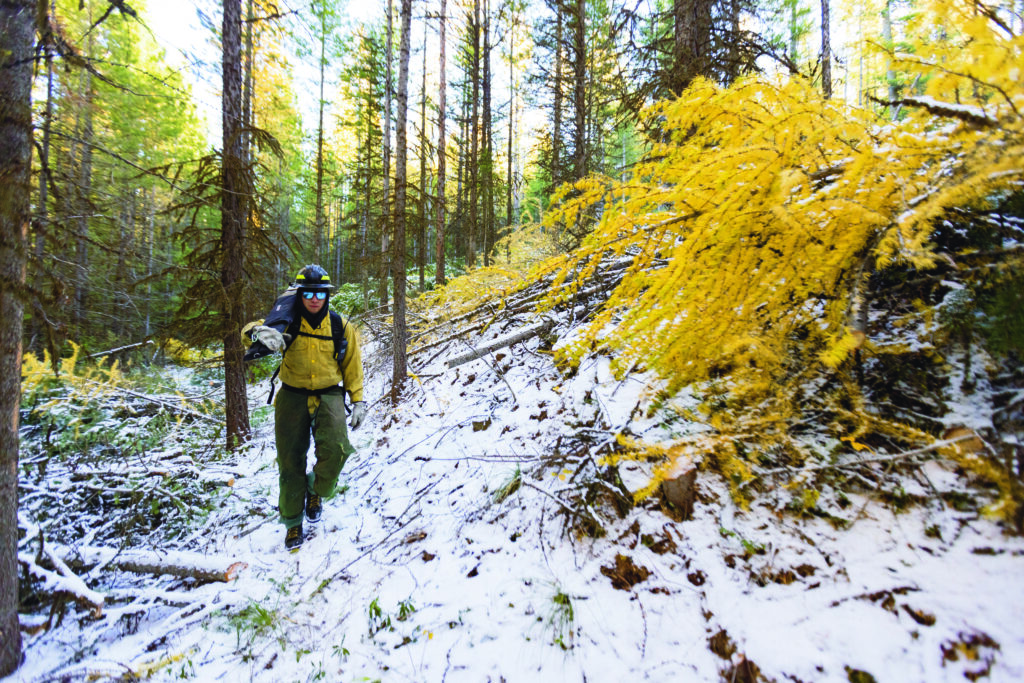
For thousands of years, fire was a friend to Native Americans.
Mali Matt has always lived in the Flathead Valley and is an enrolled member of the Confederated Salish and Kootenai Tribes. Once a student at Salish Kootenai College, she now works as a professor of culture and language and teaches multiple classes on the subjects.
Through teachings and stories from elders in her tribe, Matt has learned her ancestors were known for being regular users of fire. She’s heard that about every 25 years, they would move the tribes and burn the abandoned land before coming back years later to live again.
It was also understood that in the spring following a burn, animals would return to the burn site to feast on the new plant life. The Native Americans would take this opportunity to hunt the game in the area.
This is highlighted on the Division of Fish, Wildlife, Recreation and Conservation page on the tribes’ official website. One entry cites a Canadian trapper named Peter Fidler who traveled the area following the turn of the 18th century. He wrote that Native Americans could be seen “burning off the old grass, [that was] in the ensuing Spring and Summer [it] makes excellent fine sweet feed for the Horses and Buffalo.”
More recently, Native American reservations, like the rest of the world, are experiencing more wildfires than ever. A 2024 study by NASA looked at wildfires around the world over a span of 21 years and found fires have become more frequent, intense and extreme. KeyShawn Rogers knows this all too well.
Rogers is a member of the Crow Nation and grew up primarily in Billings, Montana. He remembers as a young boy waking up early with the rest of his family to carpool his father to work. They drove onto the fire base where Rogers’ dad worked and said their goodbyes before watching him board a helicopter and fly off. Absent for much of his childhood, Rogers’ father was consumed with the work of being a wildland firefighter, often deployed to the field while gradually rising in the ranks.
It all changed when Rogers was in eighth grade, with the sudden loss of his mother, prompting his father to take a step back from work and take an office position. This allowed his father to be at home more than Rogers had ever experienced as a child. The loss of his mother was expectedly hard, but cascaded into a life that would change him forever.
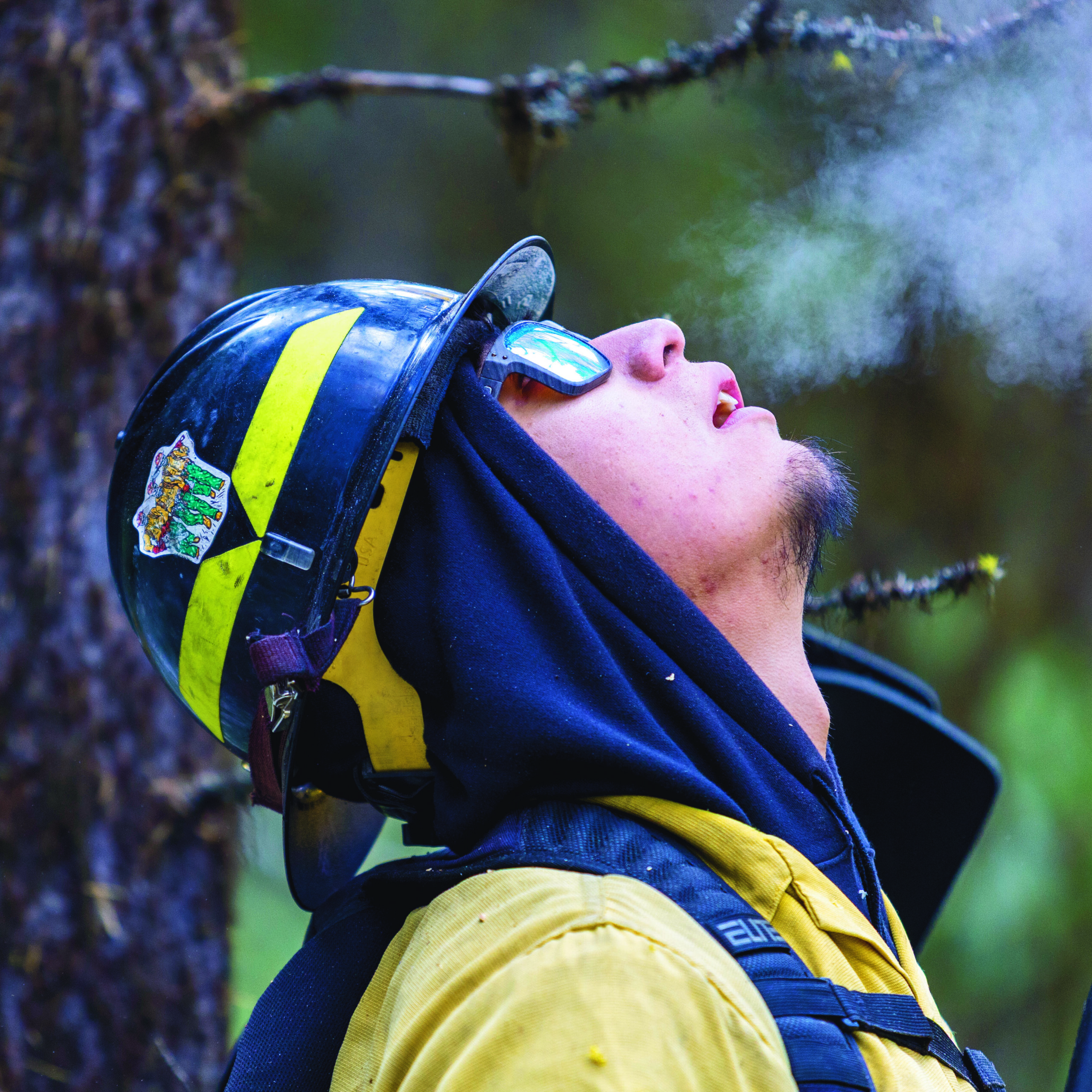
Additional time around his father meant more time that Rogers was surrounded by fire. But it wasn’t until his second year of high school when something sparked after watching “Only the Brave.” The 2017 film tells the story of a 20-person hotshot firefighting crew that lost all but one of its members while fighting the Yarnell Hill fire in Arizona in 2013. After this, his playful curiosity gradually blossomed into an obsession with the profession.
“I had a crisis when I was a sophomore in high school,” Rogers said. “I don’t want to be in an office all day. I’d rather be physically active and using my body.”
Rogers questioned his father periodically about what embracing the firefighting career could look like, but Rogers’ mind was already made up.
Not only would fire give Rogers the opportunity to live the active, outdoor lifestyle he wanted, but it also felt like a connection to his dad. It served as something he could be passionate about while growing his connection with the world.
Moving to Ronan, Montana, on the Flathead Reservation was more than just a landscape change for Rogers. It was a change to his way of life, challenging his beliefs and restructuring his way of thinking.
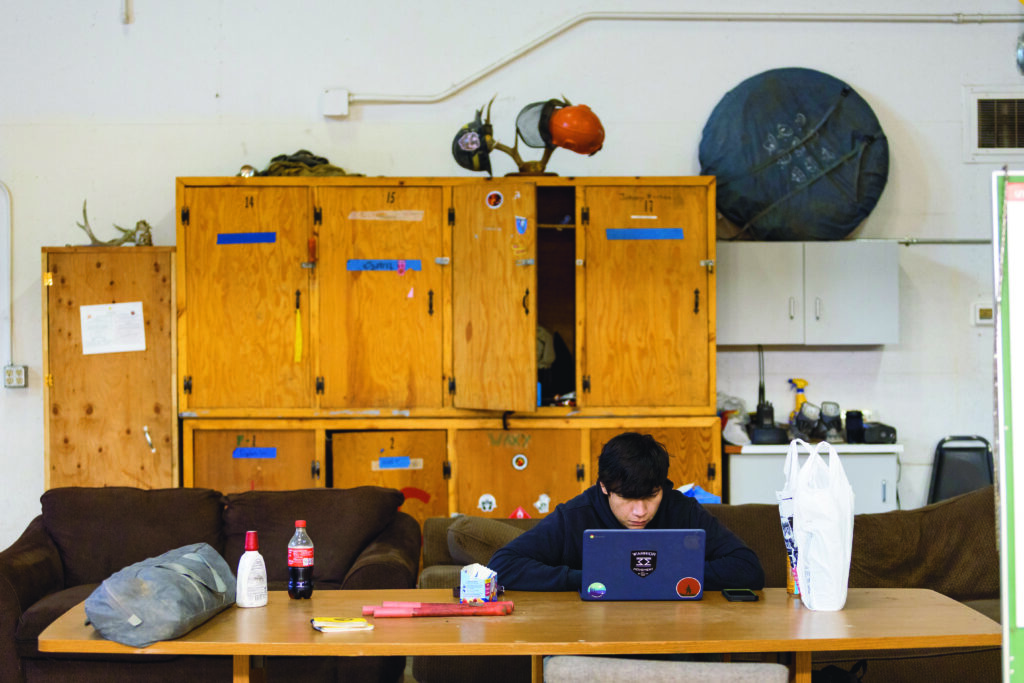
In 2021, he started school at Salish Kootenai College in Pablo, Montana, aiming for a degree in forest management. Around the same time, he secured a position at the Salish-Kootenai fire base, where he has worked since. He approached the new chapter with the mindset that things may be different, but he could grow from the opportunity and bring his new knowledge back home.
Not only did living on a different tribe’s land mean there were alternative fire practices, like the use of foam when dispersing a fire versus just water, but a cultural change he had to learn and respect.
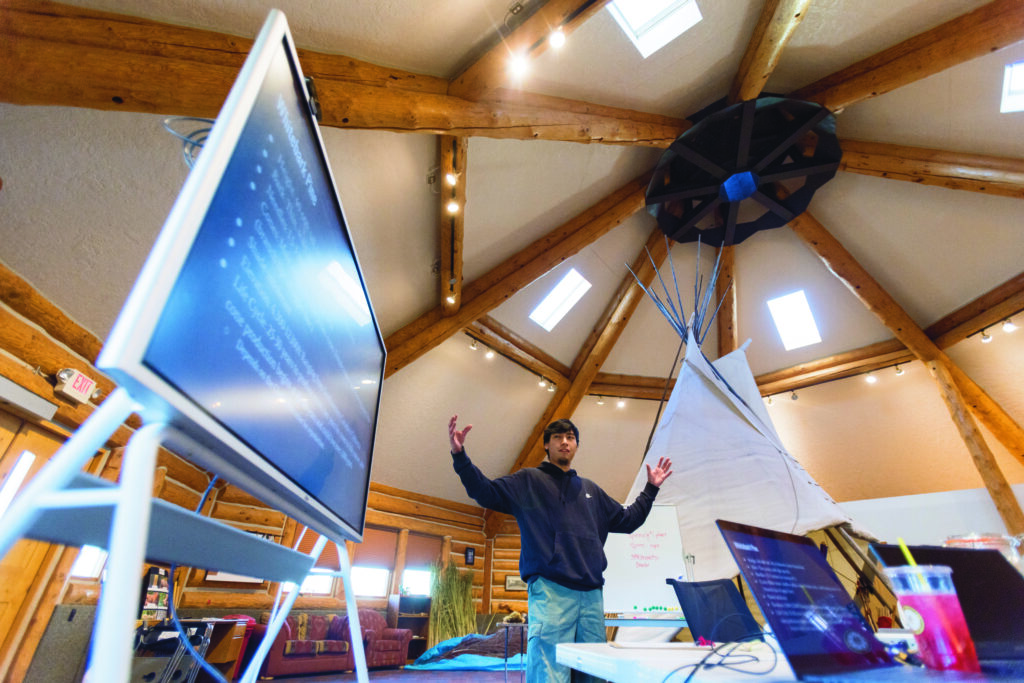
“There’s a deeper meaning for why they want to do it,” Rogers said.
In his culture class with Matt, Rogers was taught about the historic uses of fire by the tribes, like clearing the paths toward the bison ranges for easier crossing through the Mission Mountains or the regeneration of lodgepole pines for teepee poles and lodging.
Fire was, and is, a tool. The uses of fire go deeper than management of lands, it plays a role in spiritual practices and everyday life.
In December, Rogers will be circling back to his father’s way of life, leaving his girlfriend, Taliyah Medicine Horse, as he heads to Oklahoma for a 21-day assignment. While dispatched, he will gain the final certifications he needs to finish out his training.
He wants to make a collection of the knowledge he’s obtaining, the skills he’s learning and the goals he’s helping to implement, to teach his own reservation how to be more effective and aware of the landscape in ways different than their own.
Rogers hopes to return to the Crow Nation and serve as a wildland firefighter there. For his home, for his land and for his people.