Byline Magazine
Bold Storytelling in the West
Behind the Fireline
The people who keep wildfire response moving
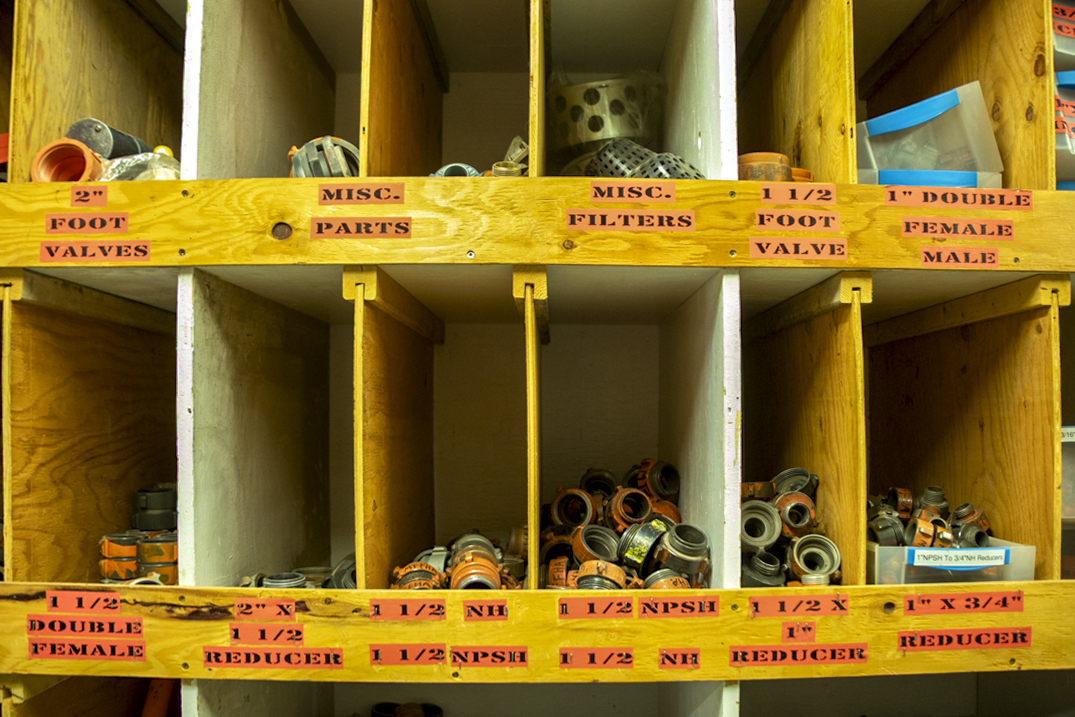
Fittings, connectors and couplings organized individually into their own slots on the wall inside of the Confederated Salish and Koontenai Tribes Division of Fire Warehouse on October 28, 2025.
-
Story by Marly Graham // Photos by Rachel Yeager
The radio doesn’t stop. Calls come in from every direction: reported fires, crew rotations, aircraft requests, weather updates. In the Missoula Interagency Dispatch Center, Ashley Bonney scans the radar, updates coming in through her headset.
“You could be sitting there doing absolutely nothing for a couple of hours, or the pen will drop and everything is going absolutely nuts,” Bonney said, referring to the moment the quiet shifts and the chaos begins.
Most of the attention during wildfire season is on the flames and the firefighters, yet an entire network of people works quietly behind the scenes to keep operations running. From dispatchers coordinating aircraft and crews, to helitack teams responding to new starts, to warehouse and transport staff moving supplies and fire camp personnel keeping crews fed and supported, these roles form the backbone of wildfire response across tribal, state and federal agencies.
For Bonney, when that pen drops, her emergency management systems come alive and instinct takes over. She logs the incident then plots it on a map to find out what district it is in. Then, she calls the duty officers and asks what resources are needed for the fire, sending off whatever they request. On the first request, Bonney usually sends out everything from engines to crews to aircraft depending on the size of the fire.
Multiple fires can break out at once, stretching resources thin. Bonney uses location as the deciding factor. For example, she prioritizes fires closer to towns over those burning in the wilderness. Throughout this process, dispatchers use a variety of communication tools such as radios, cell phones, landlines and several different websites like the Interagency Resource Ordering Capability and WildCAD-E to track resources and incidents.
Bonney said mobilization takes about 10-30 minutes, depending on the day.
When a fire grows beyond 100 acres, agency officials bring in an incident management team, which then reaches out to dispatchers for resource orders like heavy equipment, supplies and more crew. When this occurs, Bonney said the situation can get intense very quickly.
“This year, I vividly remember July 3rd. We had 17 to 20 new [fire] starts in 24 hours,” Bonney said. “I’m right now the primary aircraft dispatcher and I had eight aircraft flying that day.”
During the fire season, her radio rarely goes quiet.
Around 60 miles up the road, at the Confederated Salish and Kootenai Tribes Division of Fire dispatch center, lead aircraft dispatcher Jack Currie might only see a handful of calls in a day. The center averages 60 calls in a typical fire season.
Currie dispatches their center helitack crew for most of those calls. A helitack crew is a specialized wildfire fighting team that rapidly deploys from helicopters to reach remote or rugged areas. The crew includes 10 members in positions like manager, assistant, squad leader, crew members and trainees. Helitack crew supervisor Todd Couture leads the team.
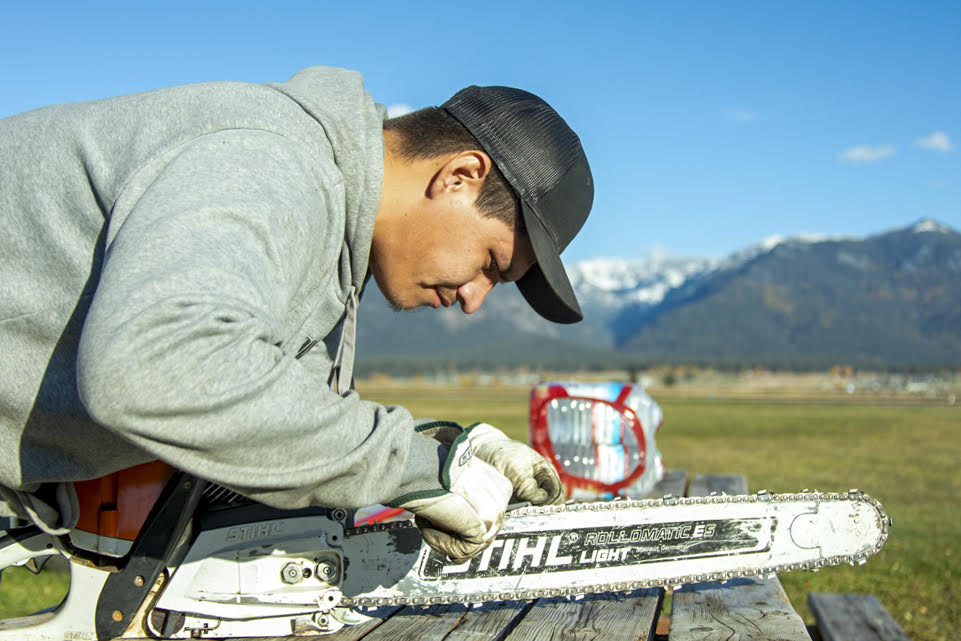
Helitack crew member Marlin Burke Jr. cleans a chainsaw during down time. He opens each cover to check for any damage or dirt inside the drive sprocket.
A typical morning at the base starts quietly with physical training and safety and weather briefings. During their 14-hour shifts, crews will also complete proficiency training, becoming more familiar with the helicopter.
Each day, the crew puts together an initial attack load, including gear, day packs and first aid kits. The crew weighs the load to make sure it doesn’t exceed the limit of the helicopter and throws it into a basket off of the side of the aircraft.
Nick Mays, assistant helicopter manager said, “We get that basket loaded with everything, so once we get the call, we just got to go out, put our yellow shirts on, our gloves, our flight helmets and jump in and we’re ready to go.”
The crew members must weigh themselves before the flight to meet the weight limit. There are usually four people on each mission: the pilot, the helitack manager in the front seat, the incident commander and the firefighter in the back.
Couture and his crew move fast once the phone rings in their office, trained to hit new starts quickly, often in rugged, roadless country where ground engines can’t reach.
“Hey Todd, go put that fire out.”
The crew snaps into motion. In five minutes or less, Mays said, the crew is off of the ground.
“Five three echo off the pad and route, pilot plus four, AFF is activated, how do you copy.”
AFF stands for Automated Flight Following, a system dispatchers use to track each aircraft. The moment the helicopter is in the air, the tracker is activated, allowing dispatchers like Bonney and Currie to monitor its location. On the ground, the dispatchers stay connected to firefighters through handheld radios.
Dispatchers are on duty as long as aircraft are in the sky and firefighters are on the fireline. For Currie, shifts usually last 14 hours or more, and during active fire periods, it is common to work 14 days in a row before getting a break.
Bonney experiences a similar case, with “normal” shifts lasting 10 hours. However, these shifts are often extended during the active fire season.
“There’s nights I’m not walking out of there until 11 at night, and you’re turning around and back in there at 7:30 in the morning,” Bonney said.
As helicopters lift off and radios crackle in dispatch, the warehouse is already in motion. Shelves are constantly restocked and carts of gear roll out of the doors into trucks, making sure every firefighter and camp has the right tools, packs and supplies at a moment’s notice.
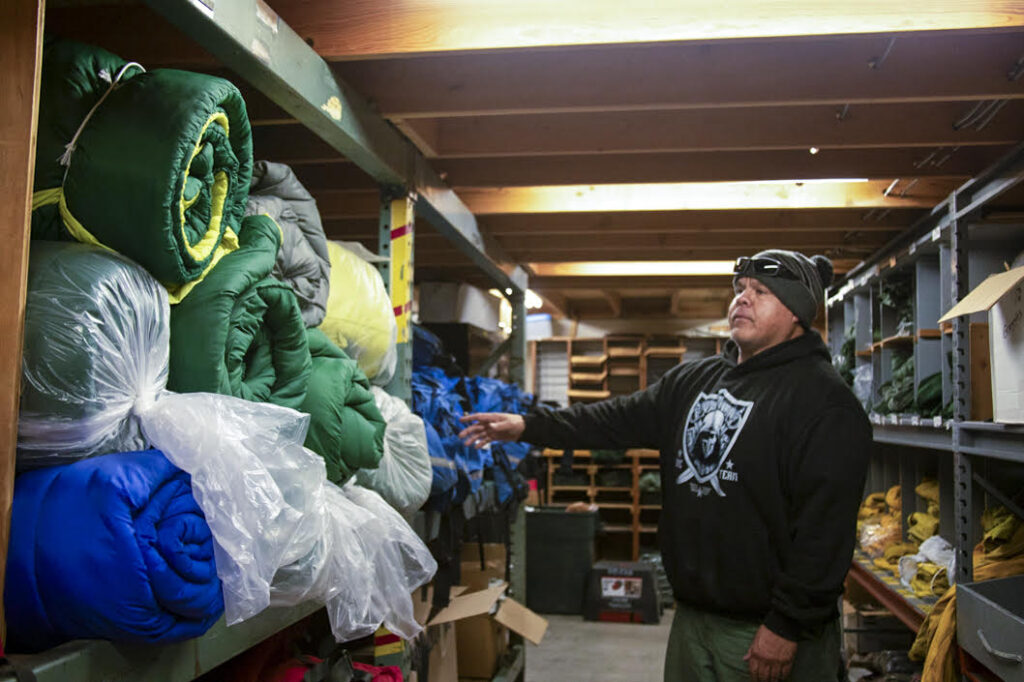
Donald Carpentier checks the count of sleeping bags in the warehouse. The warehouse supplies things such as sleeping bags, medical equipment and food.
At the CSKT Division of Fire, warehouse manager Donald Carpentier tracks all of the supplies going in and out of the doors. He said their warehouse doesn’t hold the same volume as larger fire caches, focusing mainly on equipment for crews working with the tribe. When larger orders come in, he requests additional supplies from the Northern Rockies Fire Cache.
Resources at the tribal cache include items like hose, fittings, gloves, clothing, helmets, burn fuel and batteries. Carpentier said most of the time, dispatch will email him an order or firefighters will come in and grab their own gear at the start of fire season.
During the peak fire season, he said the often 16-hour shifts can get hectic and orders start to add up.
“We can usually handle everything, but when we’re getting in these hose orders, plus burn fuel, everything’s going different directions,” Carpentier said. “When things start adding up, you got to really decide what’s more important.”
From the time they place an order to when it is out the door, he said it takes them around 30 minutes to put it all together.
The center maintains six ground support trucks ready to move gear, food and equipment wherever needed to ensure supplies reach the fireline quickly. Carpentier loads the trucks and coordinates their routes and support staff takes over once the shipments arrive at camp.
At fire camp, the day often begins at 5:30 a.m. Support staff make sure vehicles are fueled while others organize and maintain equipment or distribute pre-prepared meals.
Meals at large wildfires are often handled by national catering teams, who set up semi trucks and tents with salad bars and hot meals designed to fuel long days. Michael Umphrey, assistant crew foreman at the tribal fire division, said they feed the firefighters like they are running a marathon.
For breakfast, the firefighters often line up, wash their hands and walk through the semi trucks to get their plates of carbohydrate-heavy food and grab a sack lunch to take to the fireline. When the day is over, they repeat the process.
“I usually kill that salad bar,” Umphrey said. “At a large fire camp, they usually have just incredible salad bars. I’ve always been pretty impressed with it.”
Fire camps are set up some distance from the actual fire, but incidents can still occur. Umphrey recalled that in 2012 near Sula, Montana, a sudden microburst tore through the fire camp. Massive 50-by-100-foot catering unit tents with two inch steel pipe framing were ripped out of the ground and thrown into the air, flying over the semi trucks. Shortly after, the wind picked up and tore out the giant metal spikes holding down the tarp-covered equipment shelters, hurling them through vehicle windows.
“Somebody got some splash back from a lightning strike that was on the hill there,” Umphrey said. “It came up through the ground and the dude had no feeling in his legs. That was a pretty wild day.”
For Bonney, situations like that are her least favorite.
“Especially during medicals [medical emergencies] because you know the voices and stuff on the radio,” Bonney said. “There’s a lot of people I have not met, but I know their voice. You’ve built this over-the-phone communication and over-the-radio communication, but there’s a handful of people I’ve never met.”
Bonney said agencies like the Department of Natural Resources and Conservation will bring in a crisis management team for major incidents, such as those involving fatalities. However, those teams often overlook dispatch.
“It’s because we’re not there,” Bonney said. “We’re just a voice on the radio that gets them what they need and they don’t realize that the calls do come to us.”
Bonney said she keeps going despite the weight of the responsibility and the long hours.
“You’ve always heard the saying, if you do what you love, you’re not working,” Bonney said. “I love the unknown of every day that you walk into that office of what’s going to happen. There’s almost that little bird saying like ‘just keep going, keep going.’”