Women from across the U.S. expand their fire knowledge at Montana’s Lubrecht Experimental Forest
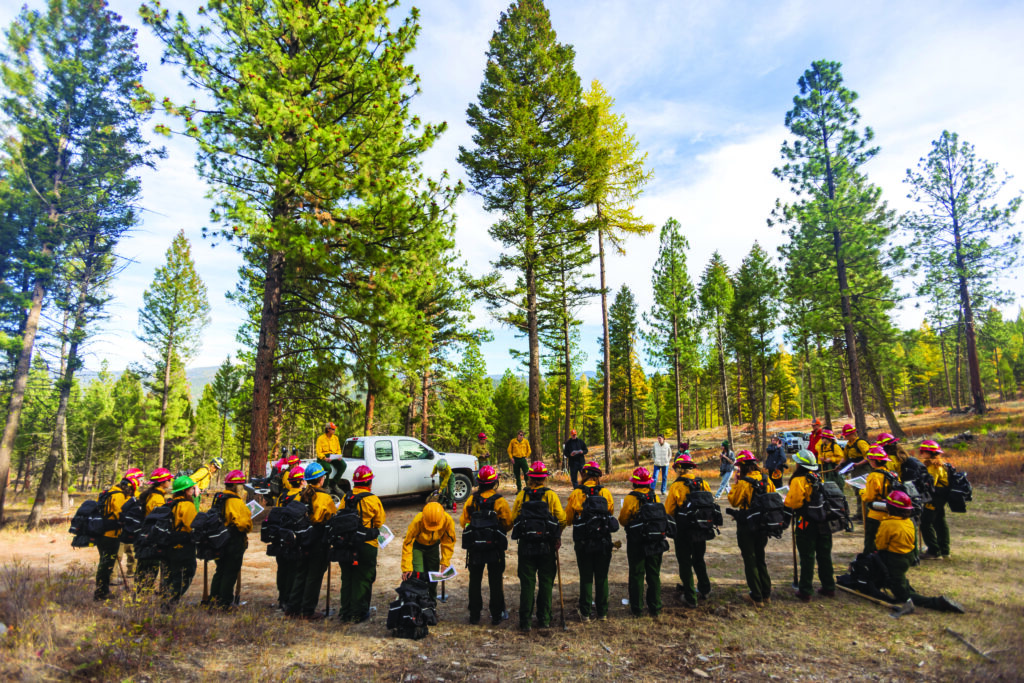
Participants at the Women in Wildfire clinic spent four days at UM’s Lubrecht Experimental Forest learning about fire ecology and the field skills needed for different careers in wildland fire. Photo by Marley Barboeisel
Story by Rachel Yeager // Photos by Rachel Yeager & Marley Barboeisel
In the pines of Lubrecht Experimental Forest, morning sunlight filtered through the trees, shining on a group of women who gathered to study the art and science of wildland fire.
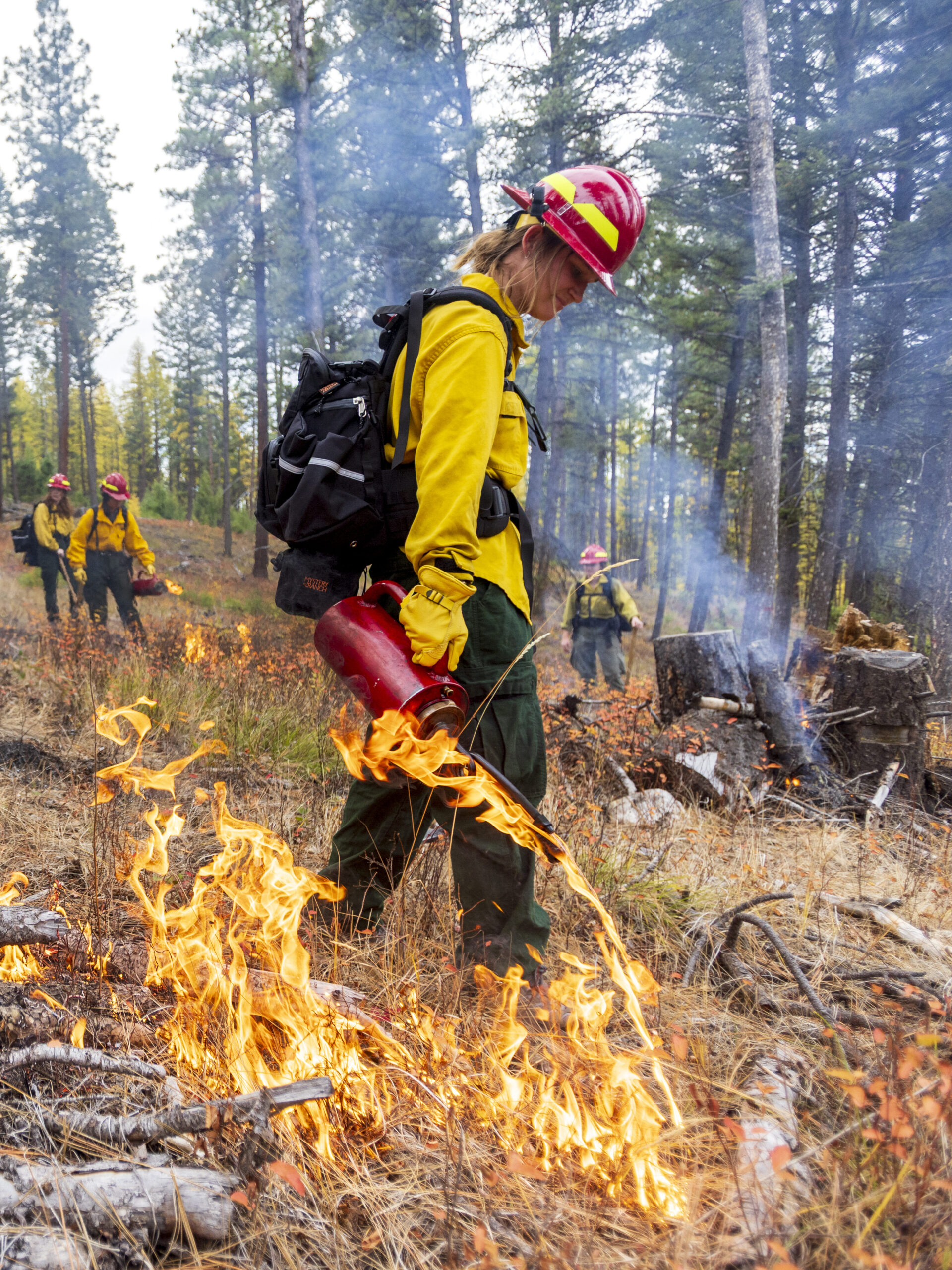
Kelly Bennett stood in the group, hands covered in soot as she packed mud onto a smoldering tree to smother the fire that was intentionally set the day before. Bennett was part of a women’s fire camp, where 20 women spent a weekend learning all about wildfire.
“I felt like I really earned it,” Bennett said. “It was really emotional and rewarding meeting all these women, learning from those women and realizing what we are capable of.”
Bennett discovered the Women’s Wildland Fire Boot Camp online when she was looking for resources to help sustain her research. She’s a graduate of the University of Pennsylvania and manager at the applied ecology lab there. Next fall, she will start her master’s degree in ecology, concentrating on the way prescribed burns can change bee and pest communities. The fire camp, open to anyone with or without firefighting experience, provided a way for her to work with the knowledge she had gained in the classroom.
When she arrived, Bennett said she was immediately struck by the complexity of fire science. Coming from an entomology background, the study of insects, she didn’t know how many layers there were in studying and managing fire.
“I didn’t realize how involved fire ecology was and how involved wildland firefighting was,” Bennett said.
The first lesson that surprised her was how trees respond to fire. Trees have adapted to fire over time, developing thicker bark, which can help protect a tree from being destroyed in a fire.
Prior to the camp she had never seen a prescribed burn firsthand.
“I went to a talk in May someone had about prescribed burns, and it was the first time I heard about it,” Bennett said. “I have not been able to stop thinking about prescribed burns ever since then. They’re so cool.”
At the boot camp, she was able to ask questions and gain confidence with the environment built by the instructors. She said they made her feel empowered, even when she didn’t know how to do something.
For many of the participants, this camp was the first time they had the chance to learn in a women-led environment. Only about 13% of firefighters in the United States are women, according to the National Fire Protection Association. They studied the behavior of fire, the importance of prescribed burns and how to stay safe on the fire line.
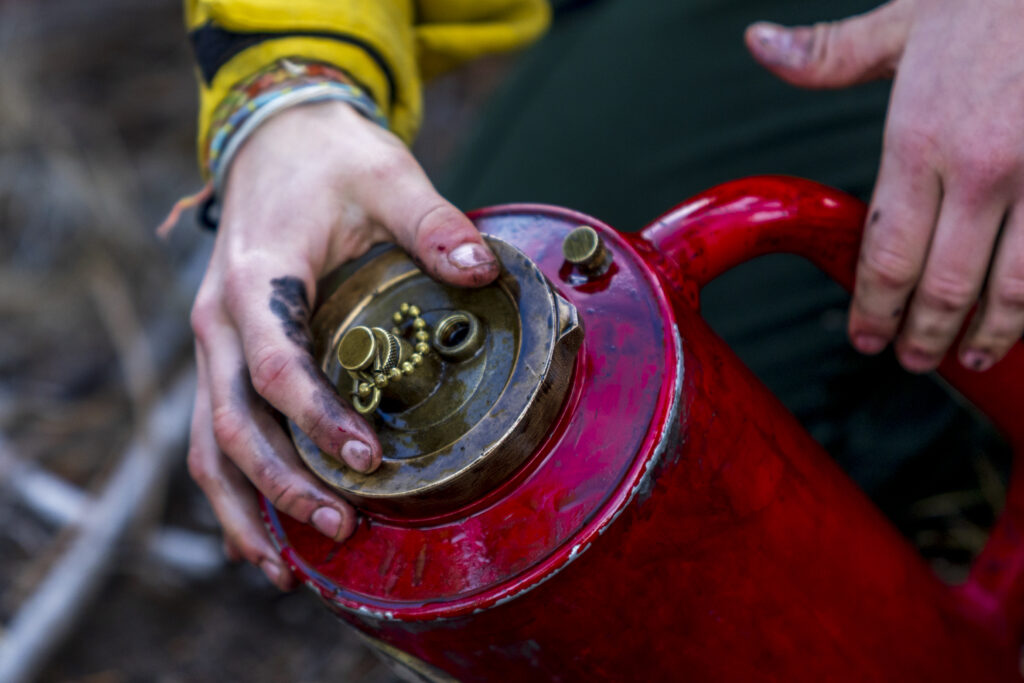
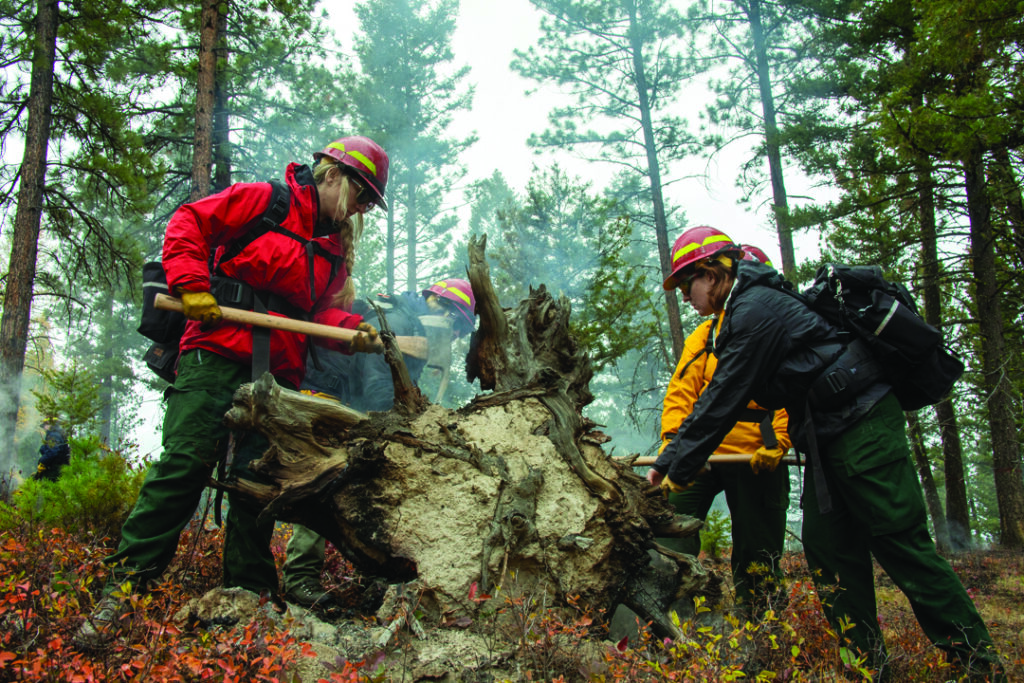
Photo by Rachel Yeager
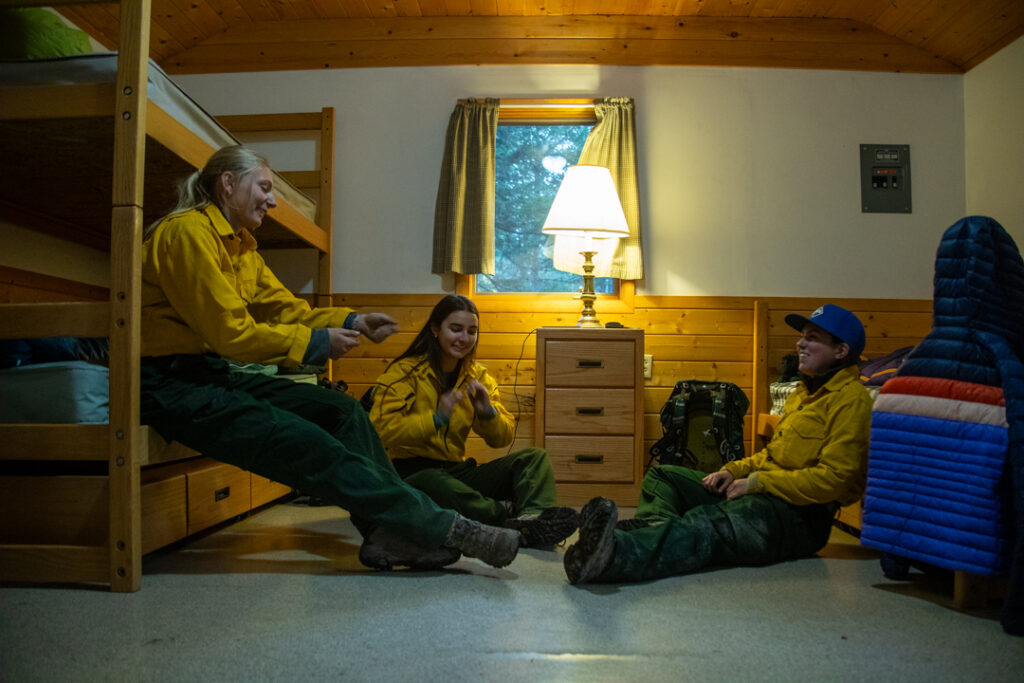
Evenings offered softer lessons. Bennett and the other women spent evenings around the campfire, talking about what it means to be a woman in a male-dominated field.
“People were simply honest and they talked about how they felt,” Bennett said. “It was this surprisingly vulnerable atmosphere. So very, very cool and comfortable.”
One of the hardest aspects of training was the pack test, a physical exam wildland firefighters must pass before being hired. The pack test requires walking three miles in 45 minutes while carrying a 45-pound weight. The test simulates the physical rigors of working on the fire line.
“I did not prepare for the pack test, and it didn’t go well,” Bennett said. “I made one mile in and I was like, at that point I don’t think I’m going to be able to do this.”
She found herself wrapping up the walk with other women who also had a rough go of it, all of them cheering each other on.
Workshops on resilience and stress highlighted the emotional pressures of fire work.
“I had no idea that mental health was such a big conversation in fire work,” Bennett said. “It was nice to see people be so open and vulnerable.”
Bennett says she’ll never forget working with these other women, all devoted to learning and growing in their firefighting skills.
“It meant a lot when we got to have a handshake with all the instructors and say thank you,” Bennett said. “I learned so much and worked so hard, and I know all the other women did, too.”